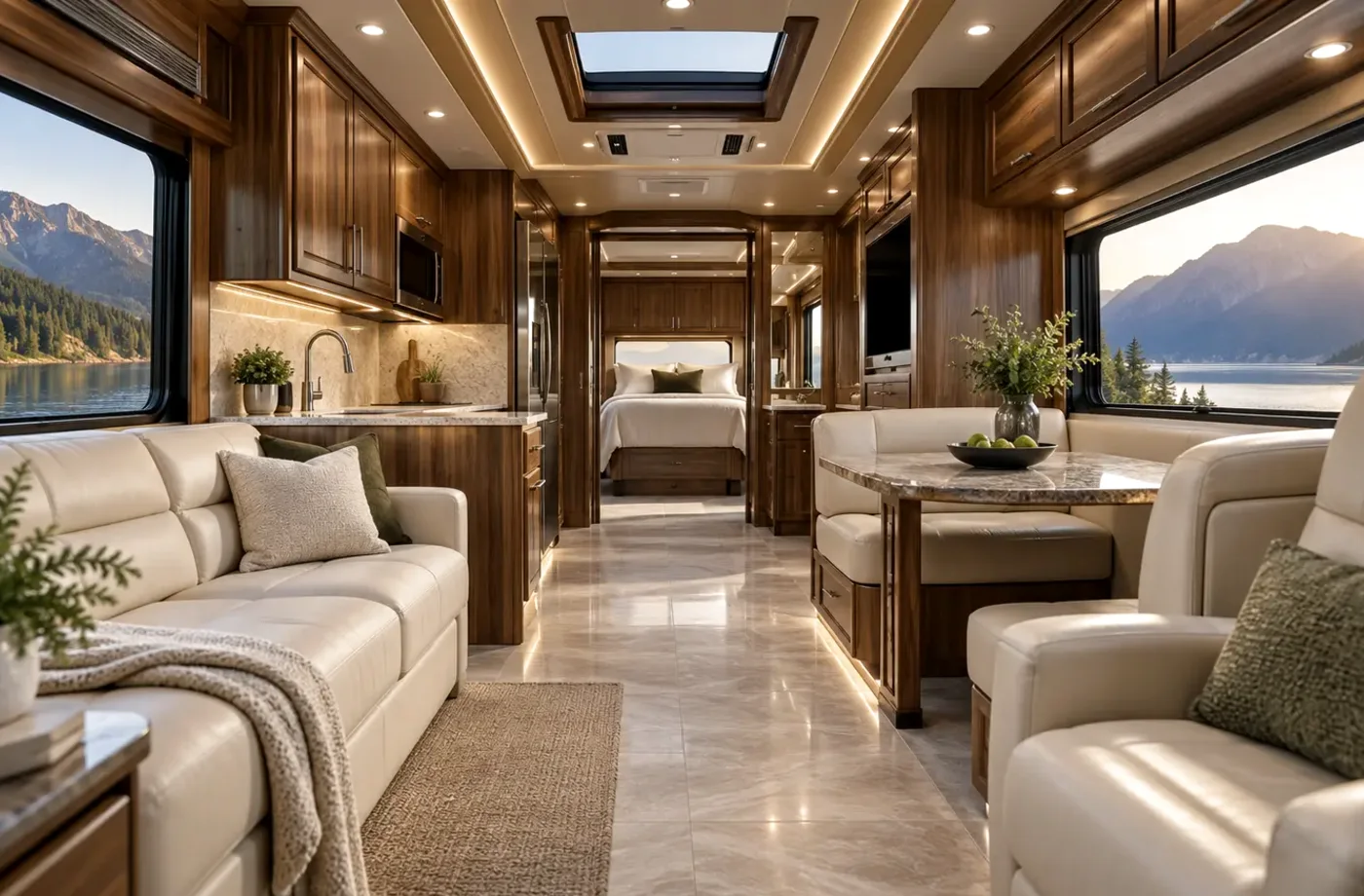
Interior Signs of Water Intrusion
Stains, soft flooring, swelling, peeling materials, musty odor and visible mold-like growth can indicate past or active moisture.
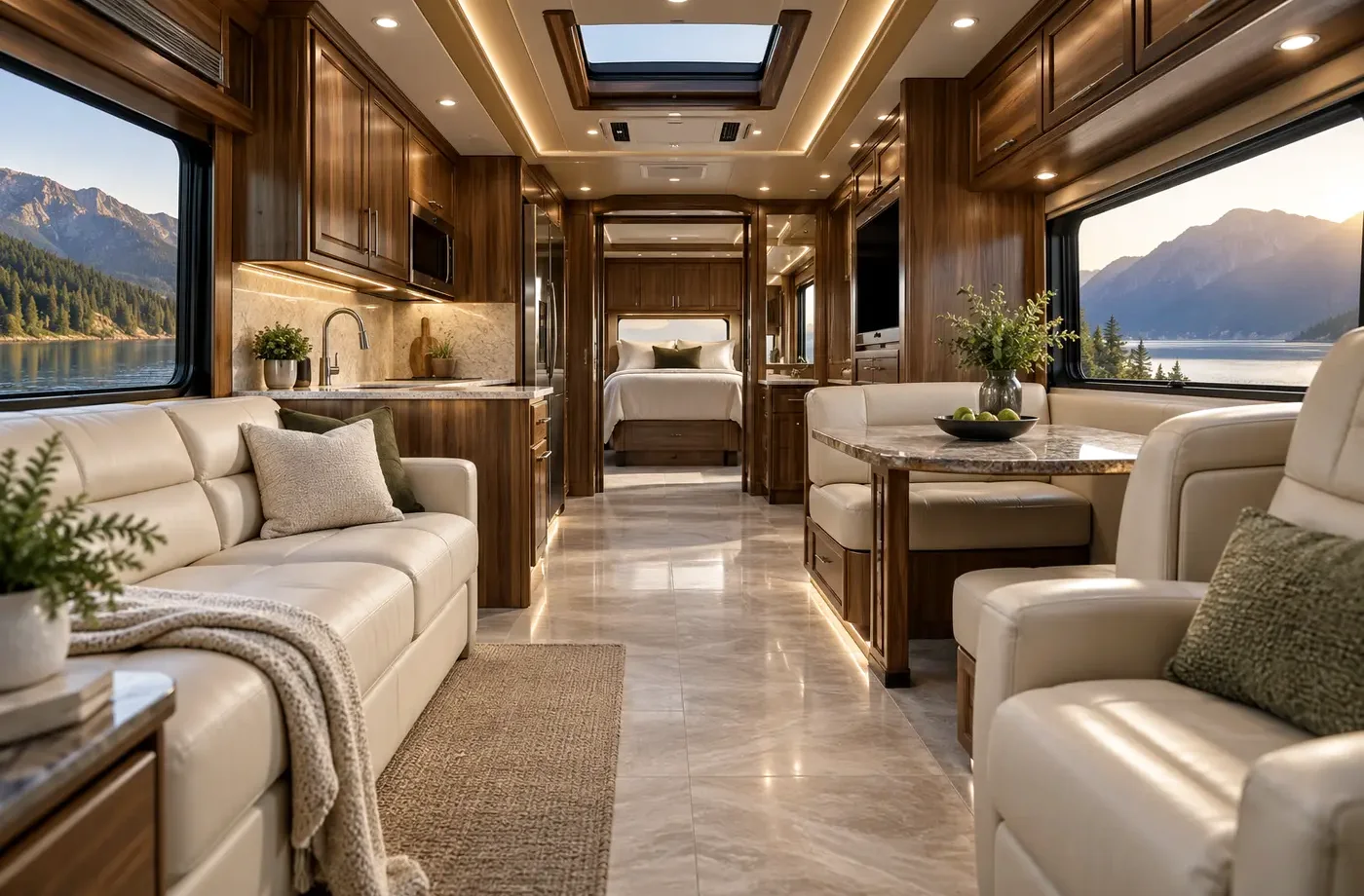
Water intrusion can enter around roof seams, vents, windows, doors, marker lights and other penetrations. Damage may spread inside walls or floors before the source is obvious.
Look for stains, softness, bubbling wall surfaces, delamination, musty odor, discolored trim and failing exterior sealant. A professional inspection may be appropriate when moisture damage is suspected.
A visible stain inside may be some distance from the original leak. Check the roof and exterior openings above and around the affected area, while avoiding unsafe roof access.
Use the related pages, inventory tools and FAQs below to compare the next step. Confirm current availability, pricing, rental terms or service scope before making arrangements.

Use these related pages to continue your research with crawlable, contextual links.
Stains, soft flooring, swelling, peeling materials, musty odor and visible mold-like growth can indicate past or active moisture.
Cracked sealant, open seams, roof damage, loose trim, delamination and damaged window or door seals can create entry points.

A qualified inspector may use moisture measurements as part of a broader inspection, but readings must be interpreted with the construction materials and conditions in mind.

A repaired leak is not automatically a reason to reject an RV, but understand what failed, what was repaired and whether hidden damage was addressed.

Treat RV Water Damage Warning Signs to Check Before Buying as a framework for asking better questions, not as a substitute for the documents and specifications for a specific RV. RVs with the same category name can differ substantially in chassis, weight ratings, floorplans, equipment and operating requirements. Use the guide to create a shortlist of the details that matter to your trip, then verify those details on the manufacturer label, owner documentation, rental agreement, lender disclosure or service record that applies to the exact vehicle or transaction. When a number or policy could change, rely on the current written source rather than an old article or a generic answer from a forum.

Many RV questions have both an objective and a personal part. Weight ratings, tank capacities, dimensions and loan APR are objective values that can be verified. Whether a floorplan feels comfortable, a motorhome is easy enough to drive or a monthly payment fits the budget is personal. Problems arise when an assumption is treated like a fact—for example, assuming every Class C sleeps the same number of people or every campground can accept a large fifth wheel. Write down what must be verified and what is simply a preference. That distinction makes research faster and helps prevent confident but inaccurate answers from shaping a purchase or trip.

Ask questions that can be answered with evidence: What is the exact model and floorplan? Which systems were tested? What are the weight ratings? What is included in the price or rental rate? What fees can be added? What maintenance records exist? What warranty or protection applies and what is excluded? If financing is involved, what are the APR, term, amount financed and total of payments? If service is involved, what diagnostic work is authorized and what happens before additional labor is approved? Clear questions produce answers that are easier to compare than broad questions such as “Is this a good RV?”
Do not rely on a single photo, a single review or one owner’s experience as proof that every unit will behave the same way. Avoid comparing RVs by list price alone when size, equipment, condition and transaction terms differ. Do not use a tow rating without checking payload and hitch limits. Do not assume a used RV is problem-free because it looks clean, and do not assume a new RV needs no inspection. For rentals, read the agreement rather than relying on a marketplace summary. For financing, compare total cost as well as the payment. Good RV research is cumulative: several verified facts should point in the same direction before you decide.

RV questions are often followed by comparisons, costs, exceptions and “what should I check?” decisions. The most useful approach is to state the practical answer early, explain what can change it, and then verify the details that apply to the exact RV or transaction. A towing answer depends on real vehicle ratings; a rental answer depends on the written agreement; a financing answer depends on the actual offer; and a service answer may require diagnosis. Direct answers are helpful only when the limits and verification steps are clear.

After reading RV Water Damage Warning Signs to Check Before Buying, reduce the information to a practical shortlist. For a purchase, keep the RV types, floorplans, size limits, must-have features and budget range that fit. For a rental, record dates, traveler count, route, campsite limits and contract questions. For service, write down symptoms and system details. For selling or trade-in, gather ownership, condition and payoff information. Bring the shortlist to the relevant Davis RV Sales page and compare it with current information. The final decision should be based on the specific RV or transaction, not on a generic article alone.

A persistent musty or damp odor can be a warning sign, although odor alone does not identify the source.
Water can travel through walls and structures, so the visible damage may be away from the entry point.
Water intrusion is one possible cause, but construction defects and bonding failures can also contribute.
The decision depends on the extent, quality of repair, remaining structural condition and price. A qualified inspection can help.
Use it to understand the topic, note the details that must be verified and then move to the relevant inventory, rental, financing, service or contact page.
No. Floorplans, dimensions, capacities, equipment and operating requirements can vary substantially by model.
For important specifications, pricing, contract terms and safety questions, verify the information with the current document or professional responsible for the exact RV or transaction.
Editorial AI imagery is used in general content. Actual vehicle listings should use verified photos of the specific RV.