Vehicle Details
Year, manufacturer, model, trim, floorplan, VIN and mileage where applicable establish the basic identity of the RV.
An RV’s value depends on more than year and model. Condition, mileage for motorized units, floorplan, equipment, maintenance history, damage, tires, roof condition and current market demand can all influence an actual purchase or trade evaluation.
Online guides can provide a starting point, but a real RV value usually requires the exact VIN or model information, options, condition and a physical or documented evaluation.
Prepare accurate information rather than trying to maximize a value by omitting defects. A transparent description helps the buyer or dealer make a more reliable assessment.
Use the related pages, inventory tools and FAQs below to compare the next step. Confirm current availability, pricing, rental terms or service scope before making arrangements.

Use these related pages to continue your research with crawlable, contextual links.
Year, manufacturer, model, trim, floorplan, VIN and mileage where applicable establish the basic identity of the RV.
Water intrusion, roof and seal condition, tires, appliances, batteries, body damage, interior wear and maintenance history can materially affect value.

Factory options and useful upgrades may influence desirability, but not every modification adds its original cost to resale value.

A trade can emphasize convenience and transaction simplicity, while a private or direct sale may involve different pricing, time and responsibilities. Compare net outcomes.

A useful conversation about What Is My RV Worth? starts with the exact year, manufacturer, model, trim or floorplan, VIN and mileage where applicable. Gather the title or registration, loan payoff information if money is still owed, manuals, keys, remotes and service records. List factory equipment and meaningful upgrades separately. Photos should show all sides, roof-visible areas if safe, tires, interior rooms, appliances, storage bays and any known damage rather than only flattering angles. Accurate information helps a dealer or buyer decide whether the RV fits their purchasing criteria and reduces the chance that an early estimate changes dramatically after inspection.

Year and model establish only a starting point. Roof and seal condition, evidence of water intrusion, tire age, body damage, interior wear, appliance operation, batteries, generator hours, chassis maintenance and service history can all influence an evaluation. An RV that is clean but has unresolved leaks or old tires may require substantial reconditioning. Conversely, documented maintenance can help the evaluator understand how the vehicle has been cared for. Be direct about known problems. Hiding a defect can waste time for both sides and may create problems later in the transaction.

If the RV has a loan, request a current payoff from the lender and ask how long the payoff quote is valid. Compare that figure with the evaluated purchase or trade value. When the value is higher than the payoff, the difference may represent positive equity. When the payoff is higher, the shortfall must be handled as part of the transaction and can affect the next purchase or financing. Do not rely on the statement balance alone because daily interest or fees can change the exact payoff. Bring lender contact information and account details through the secure process requested by the business.
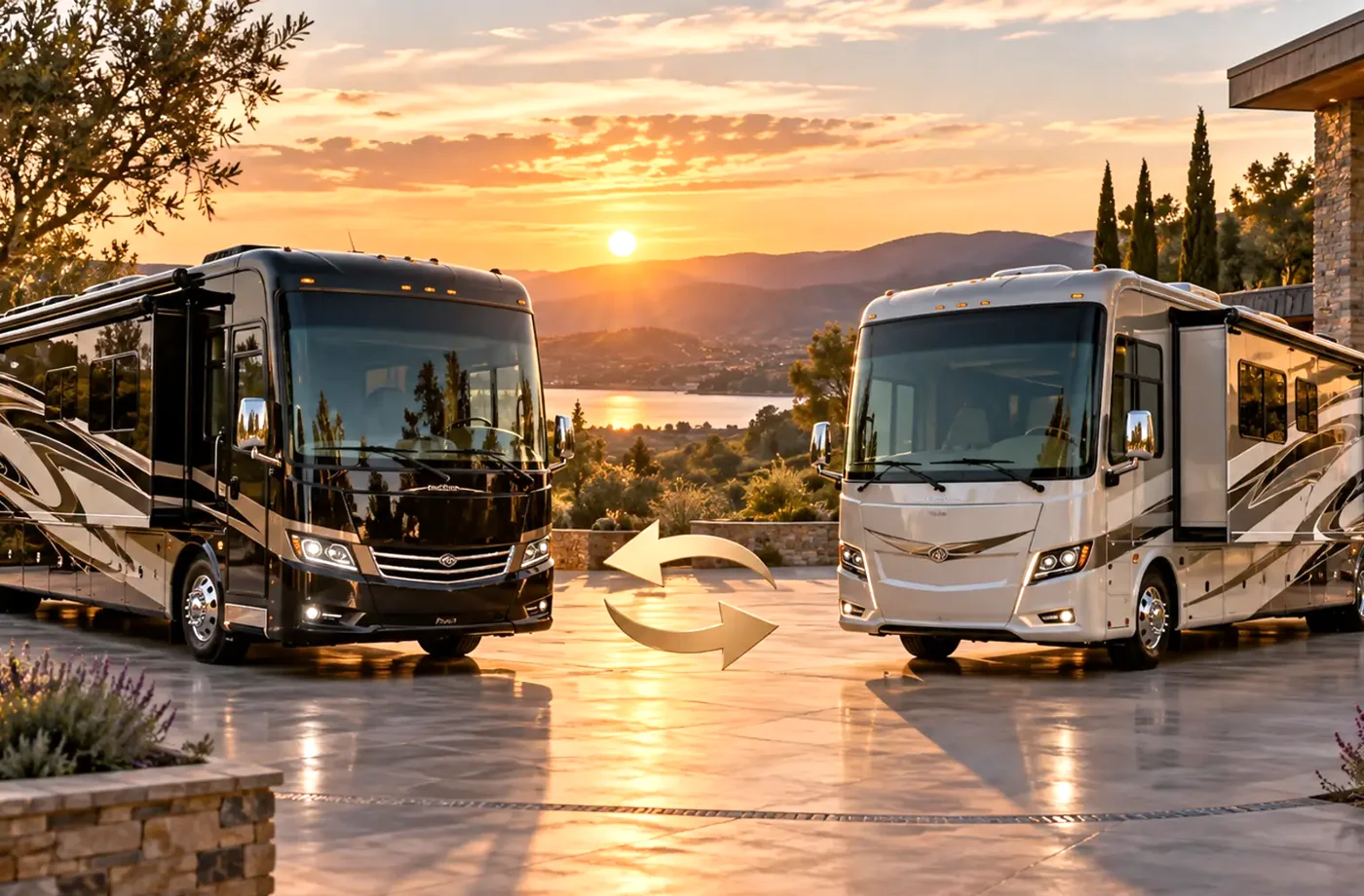
A direct sale can separate the RV from any replacement purchase and may prioritize a simple transfer. A trade-in combines the current RV with the purchase of another unit and can make timing and paperwork easier. Consignment, when offered and confirmed, means the RV is marketed on the owner’s behalf under a written agreement and may take longer. Compare the expected net proceeds, time, reconditioning responsibilities, advertising, storage, insurance and fees for each route. The highest headline number is not always the best outcome if the process adds substantial time, cost or uncertainty.

A clean, accessible RV is easier to evaluate. Remove personal items, empty storage, clean the interior, locate keys and remotes and make the major systems available for testing. Gather receipts and maintenance records. Before paying for major repairs solely to increase resale value, ask whether the expected increase is likely to justify the expense. Some safety or function repairs can improve marketability, while cosmetic upgrades may return only part of their cost. If a known issue will remain unrepaired, disclose it clearly so the evaluator can account for it.

Before accepting an offer for What Is My RV Worth?, confirm the purchase or trade amount, deductions, payoff handling, title requirements, payment method, possession date and any conditions that can change the figure. If the RV is being traded, review the selling price of the replacement RV separately from the trade allowance so the net transaction is clear. Keep copies of signed paperwork and remove personal data from connected devices, navigation systems and smart-RV apps before transfer. Verify license plate, registration and insurance steps that apply to the transaction. A clear written process is more important than a verbal estimate.

Location: Davis, California
Open 24/7 for inquiries. Email us to confirm visiting directions and the availability of the RV, rental or service you need before traveling.
Email: admin@davisrvsales.com
Hours: Open 24/7
For financing questions, request a callback. This is not a credit application. Do not send Social Security numbers, bank information or card details.
An online estimate is usually preliminary. Exact value depends on the actual RV, condition, equipment, market and evaluation process.
Mileage can matter, but service history, age, condition and mechanical health also influence a motorhome evaluation.
Some upgrades may help desirability, but added cost does not automatically translate dollar-for-dollar into resale value.
Year, make, model, VIN, mileage, equipment, condition, photos, maintenance history and title or payoff information are useful starting points.
Potentially. Obtain a current lender payoff so the value can be compared with the amount owed.
Not automatically. Ask whether a repair is likely to add enough value to justify its cost.
Not necessarily. The transaction, reconditioning, time and responsibilities differ, so compare the net outcome.
Water damage, worn tires, body damage, deferred maintenance, nonworking systems, high mileage and current market demand can all affect value.